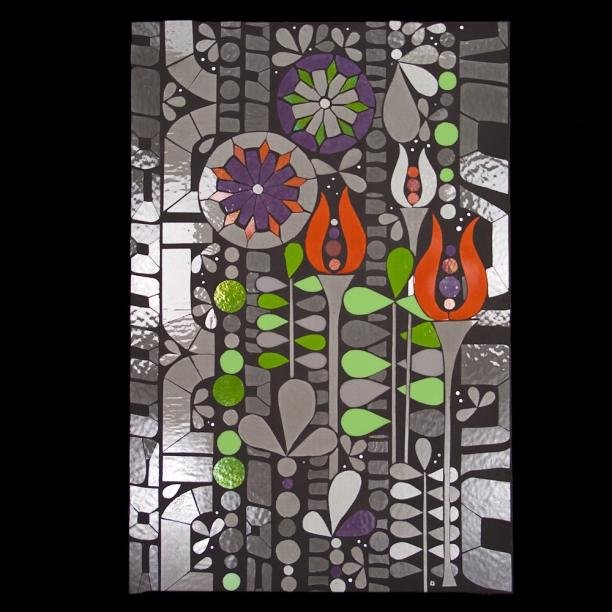
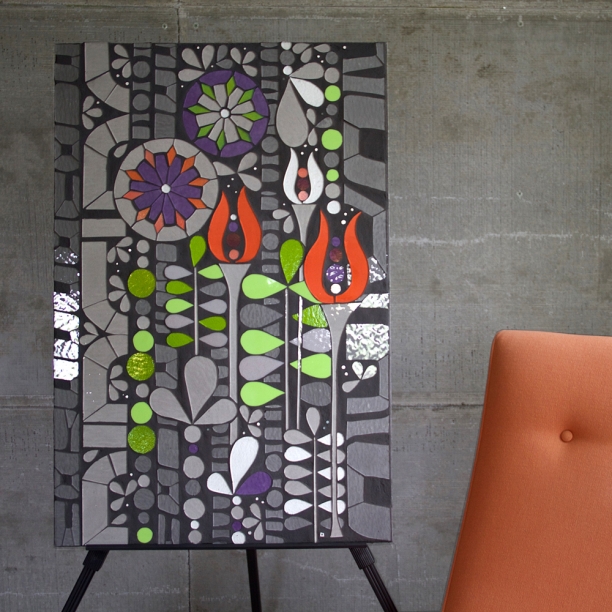
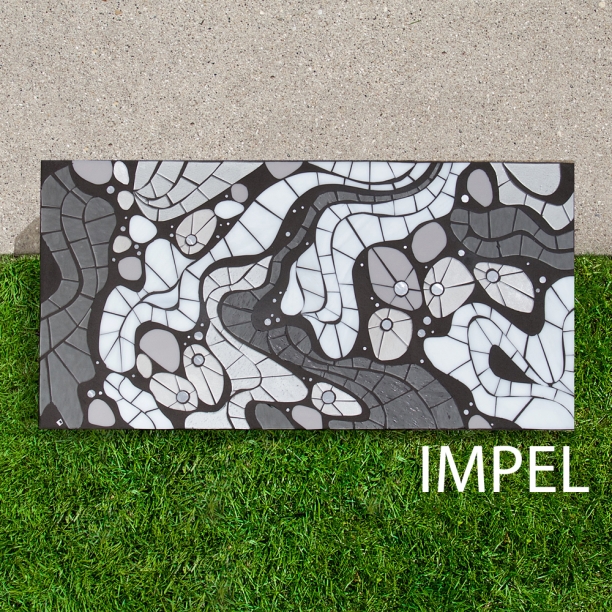
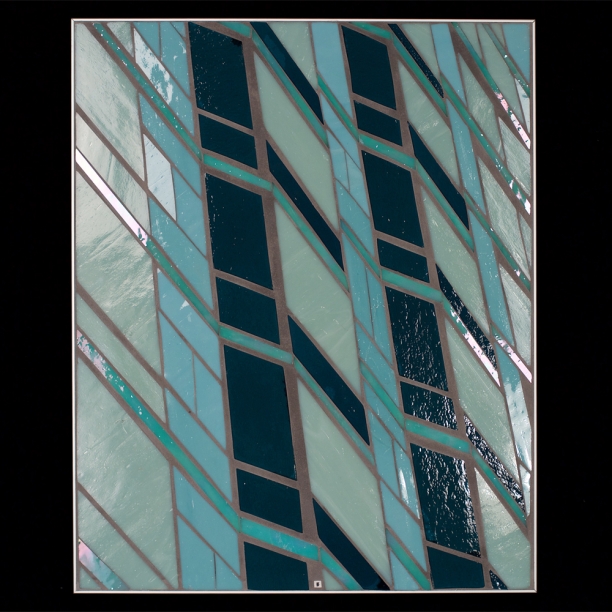
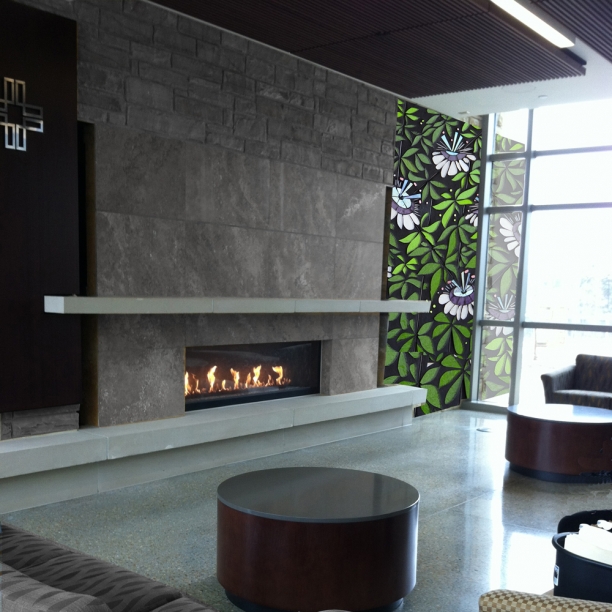
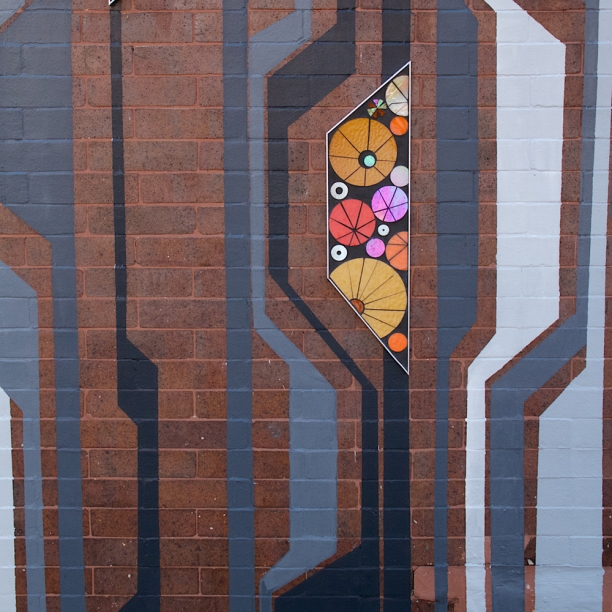
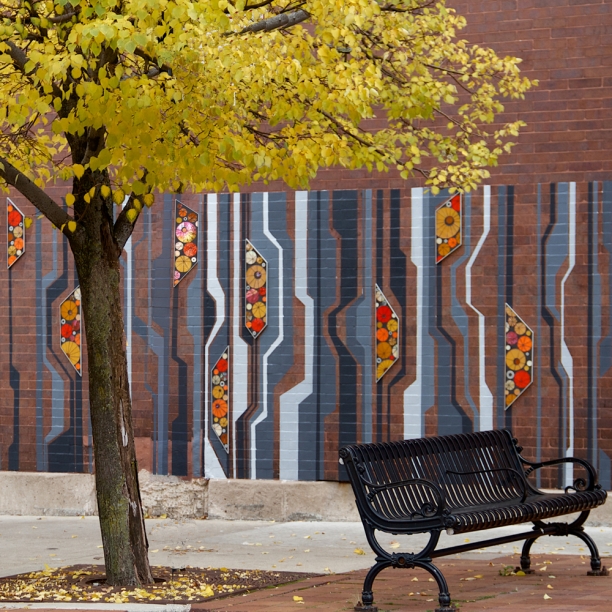
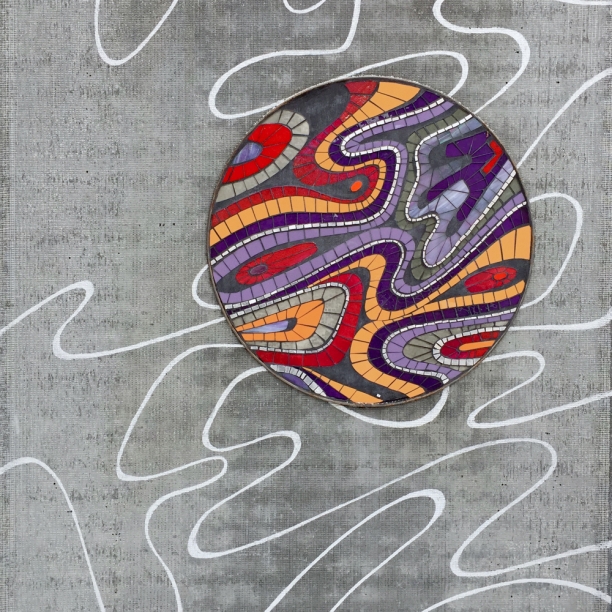
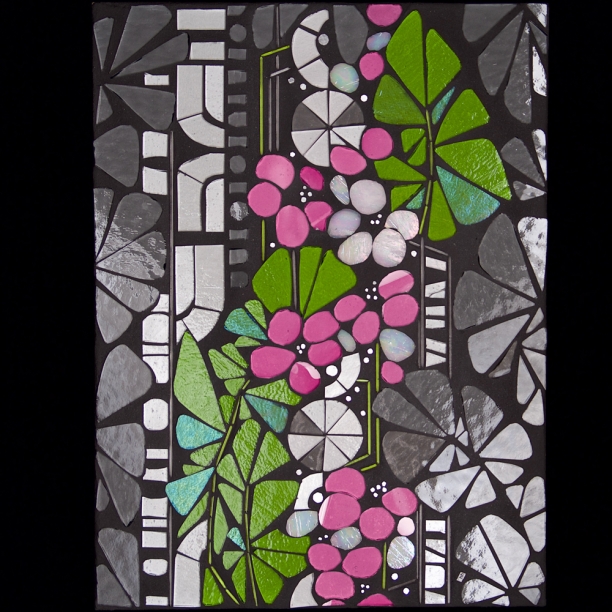
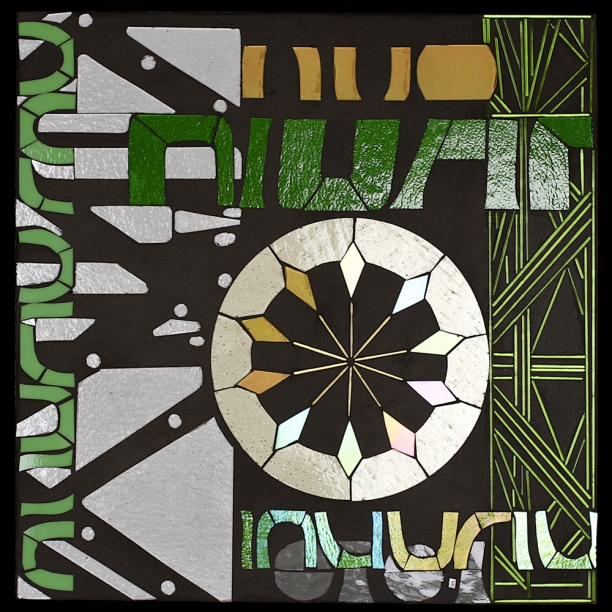
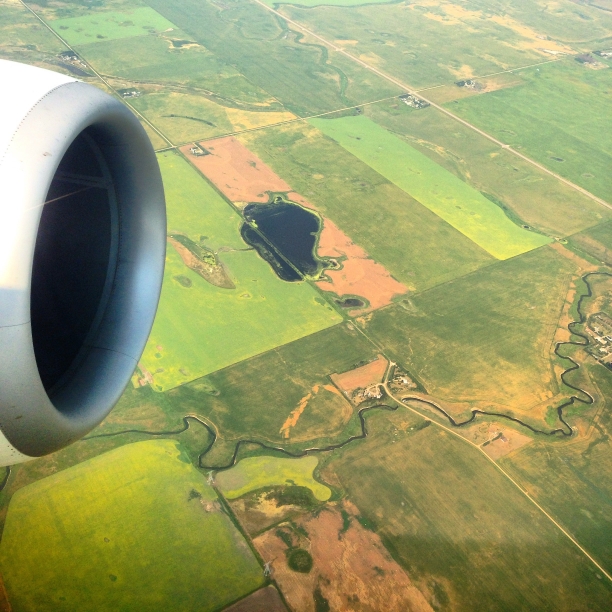
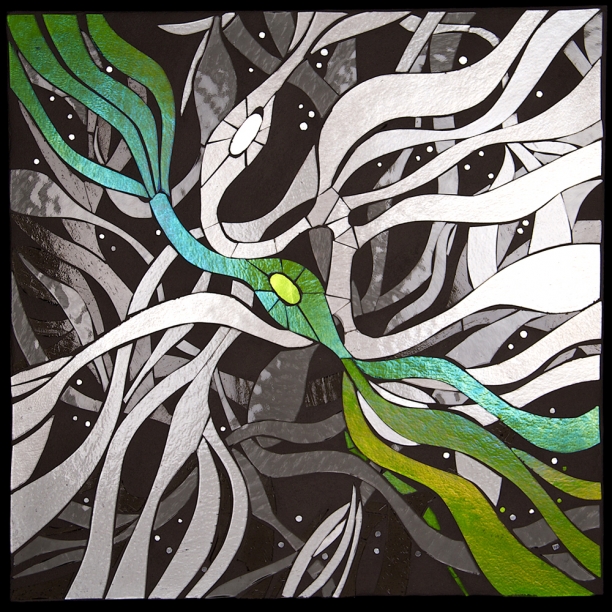
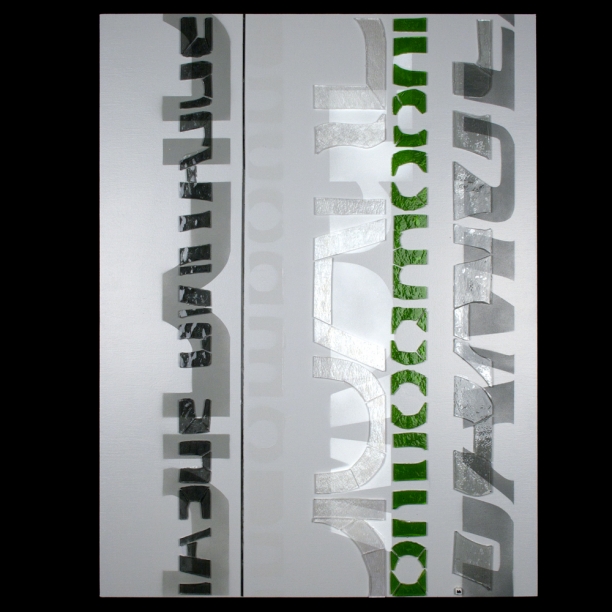
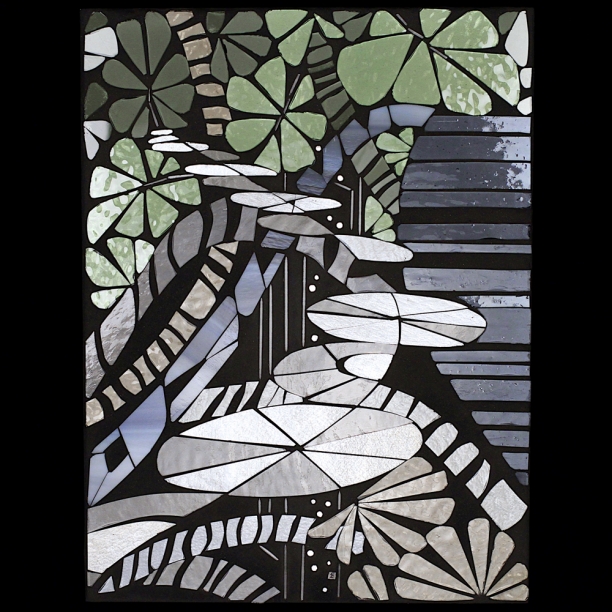
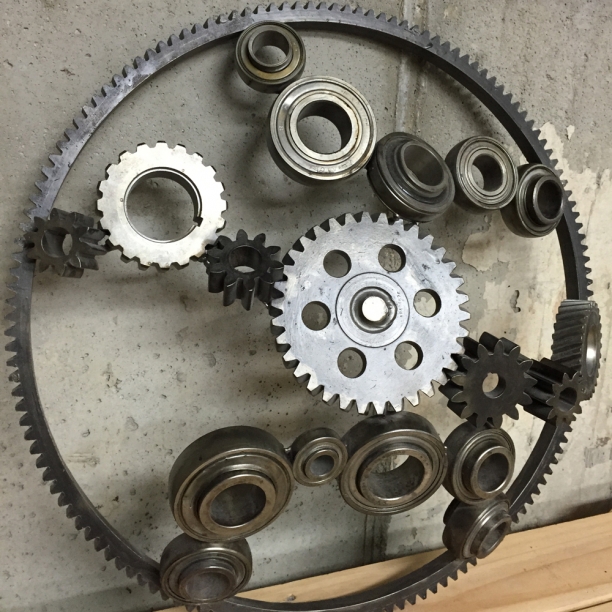
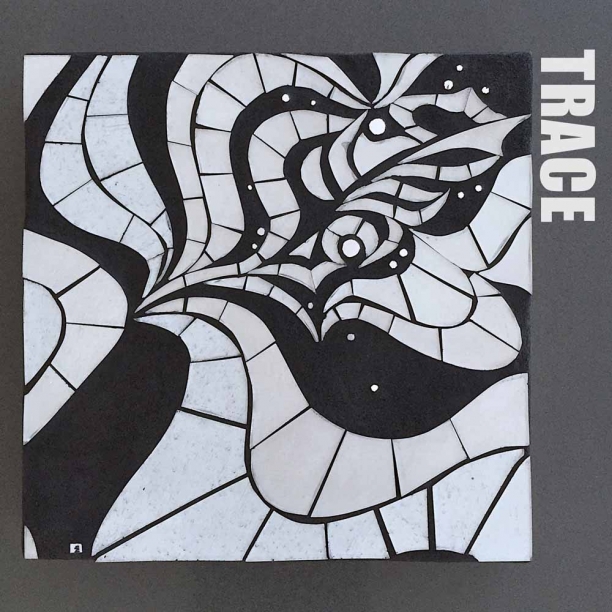
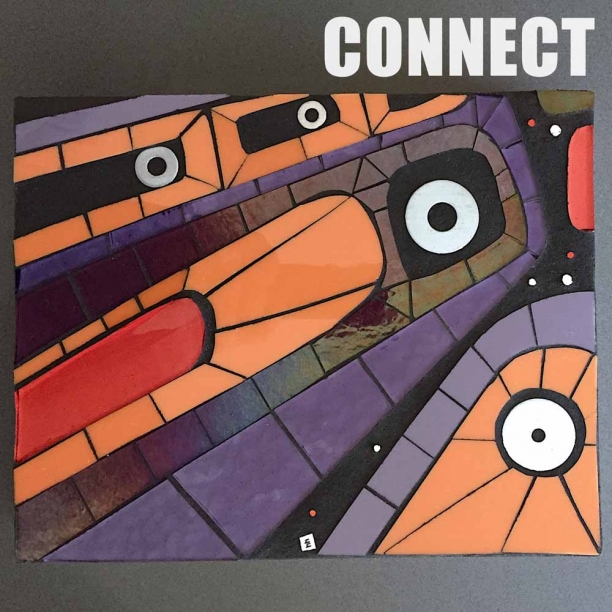
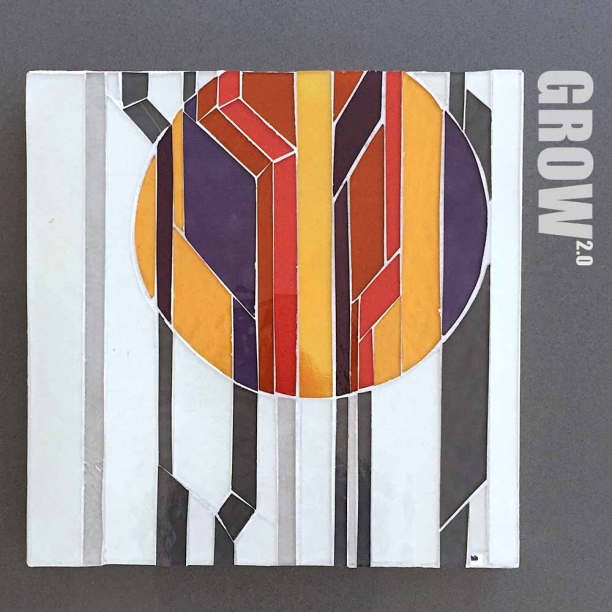
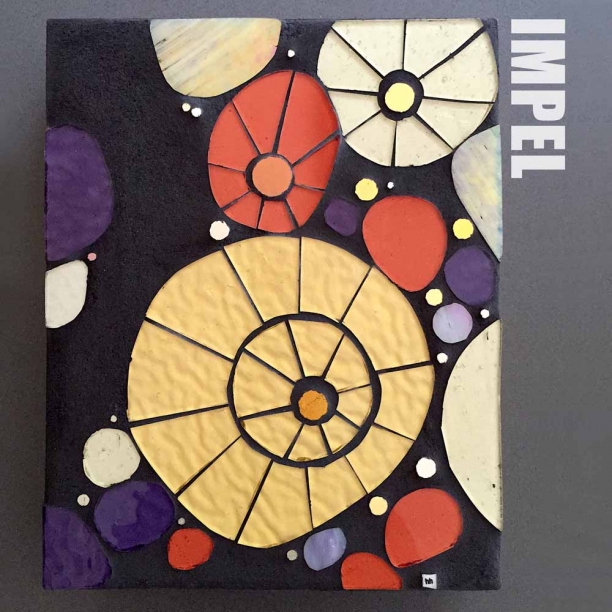
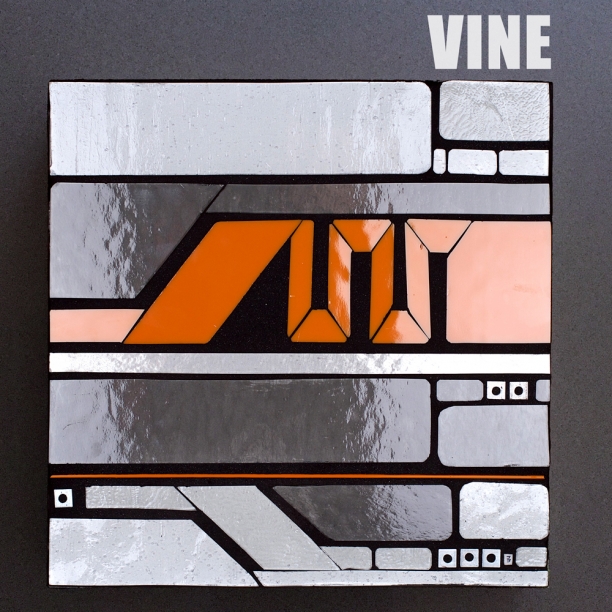
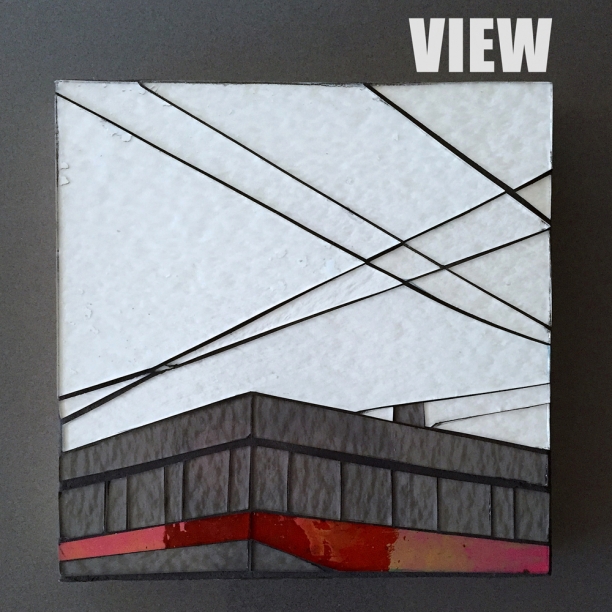
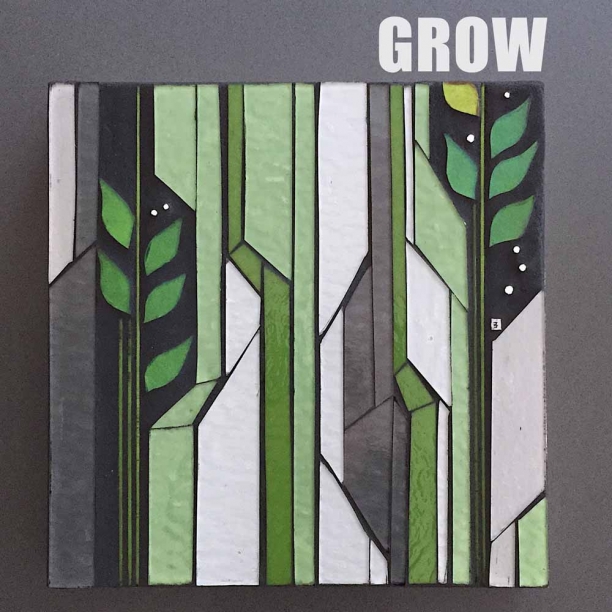
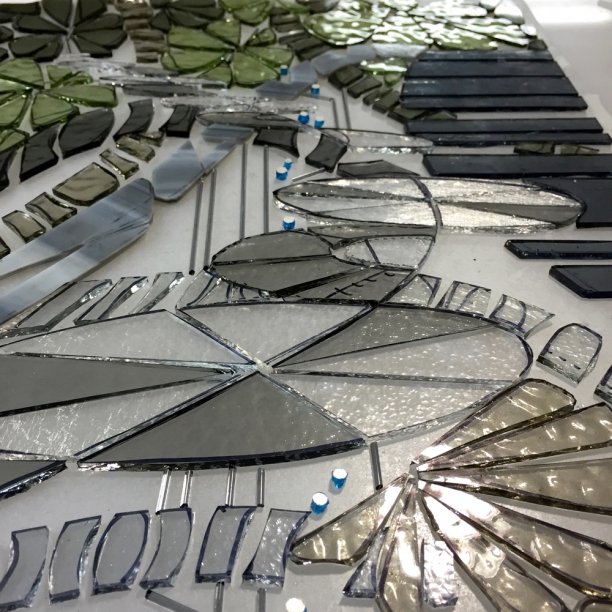
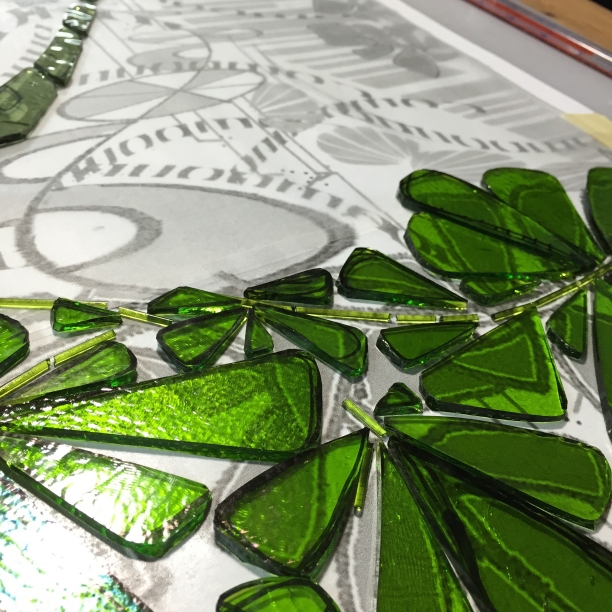
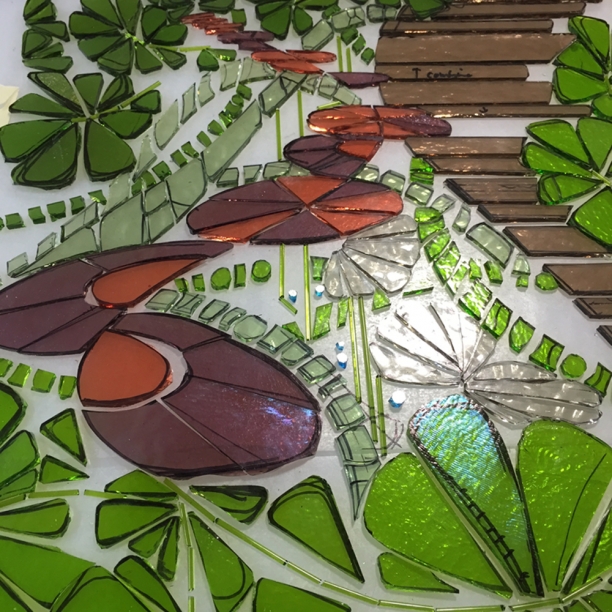
An exhibit of all artists participating in this year's Open Studios Evanston gave me the opportunity to explore the first of the Proust project concepts at larger scale. At 24"x36", Encode was originally developed as a visual concept for the Proustian concept "mind as flourishing garden." Aesthetics of the built world (line, repetition, symmetry) inform a graphic living wall which thrives and flourishes with information, structural and functional elements. A grayscale glass palette is punctuated by vibrant color to echo the role of nature as an alerter within the urbanscape. Encode can be seen in the Made in Evanston show opening at the Noyes Street Cultural Center on Thursday June 4th at 6-9pm with the show continuing through July 5th.
Live vibrantly | glass in grayscale
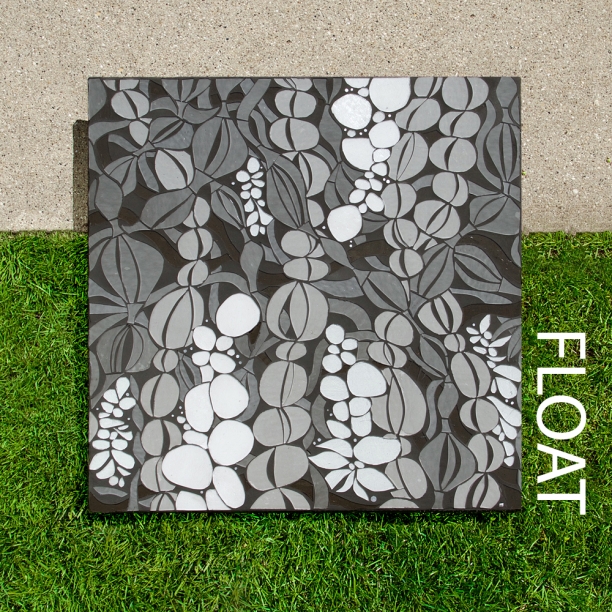
Over the past month, I have selected some series from my portfolio to explore in grayscale at a larger size. I am developing a range of linear+geometric and curving+organic pieces as part of my "art to be lived with" offerings. Impervious to light and water, glass is uniquely suited for kitchens, bathrooms and light-filled living spaces.

I often recommend selecting a neutral or grayscale palette for permanent residential installations. Shimmering glass in a neutral palette offers timeless visual interest while avoiding ever-changing color trends. Or neutrals with a pop of color can bring in a color element without overpowering the clarity of a neutral palette. One of my favorite color accents is grayscale with green which makes a direct connection between the natural world and built world.
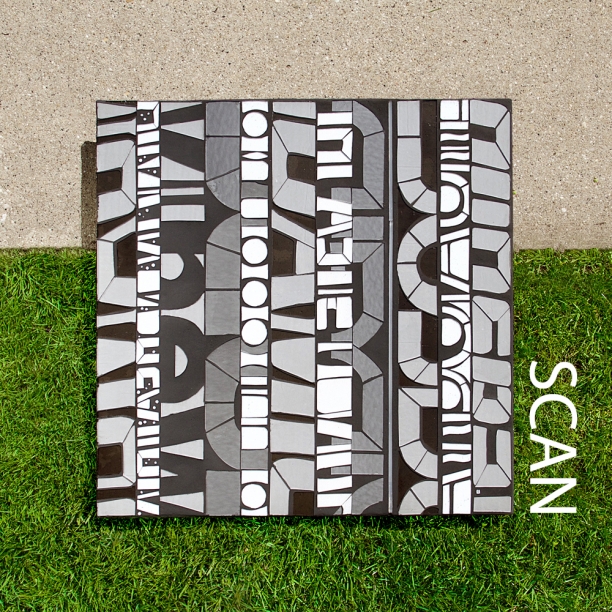
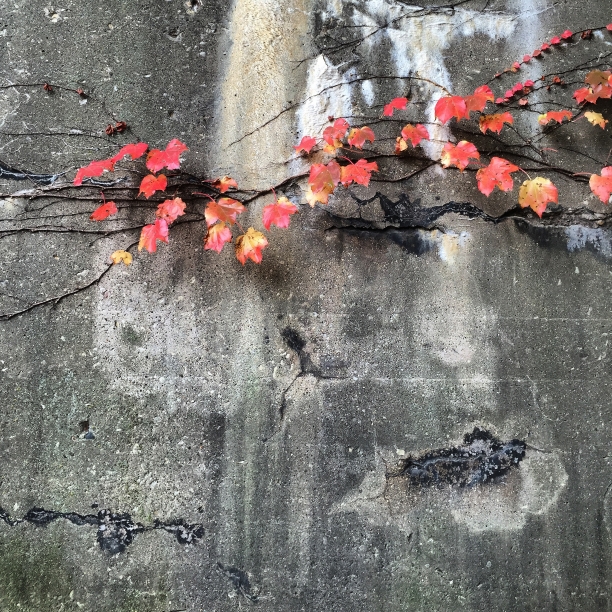
I love this connection between the raw beauty of buildings and architectural surfaces and the growing, blooming force of nature. Everything I make in glass is a sort of conceptual living wall. I wanted to photograph the pieces at the intersection between the built world of functional surfaces and technology and the often overlooked flourishing natural world. First concept image is of the graphic piece Scan which offers abstracted letter form as part encoded information, part writing on the wall, part thriving vines.
Reflect: invited to participate in duckART
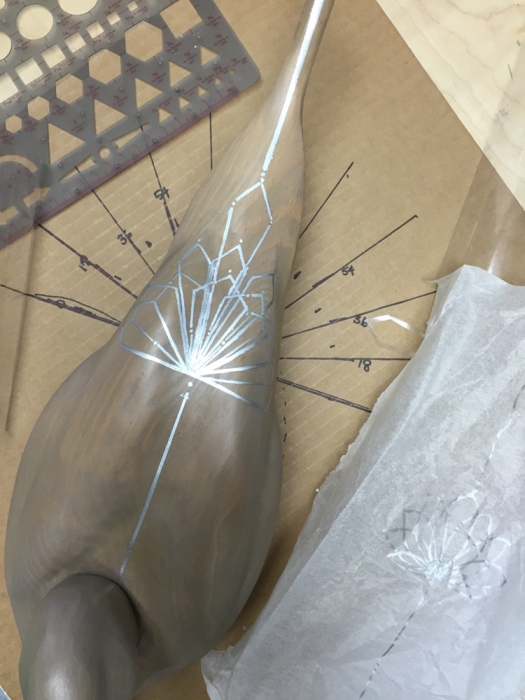
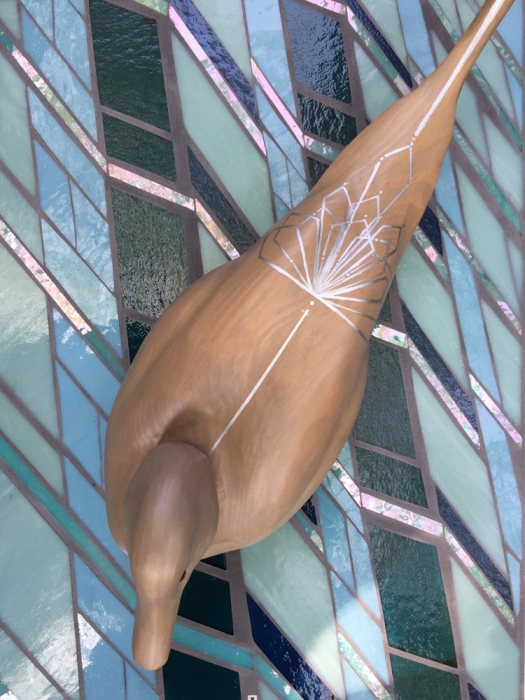
When Elisabeth Dunbar of the Lincoln Park Conservancy invited me to participate in the 8th annual duckART, the connection between urban dwellers and natural world caught my interest. Each year, a group of Chicago architects, designers, landscape architects and artists are invited to create a one-of-a-kind decorative duck for a silent auction. Other participants for this year include JAHN, makeArchitecture, luftwerk, Searl Lamaster Howe Architects, site design group and Ross Barney Architects. The Lincoln Park Conservancy is launching a park improvement project at the North Pond Nature Sanctuary to ensure this lakefront treasure remains a natural, healthy place for both people and wildlife. Ducks are a special part of the natural beauty of the pond with 26 duck species that rely on its clean water and native plants as a safe stopover during migrations. An additional 185 avian species, frogs, turtles, butterflies and dragonflies also make the pond their home. It is a true sanctuary where urban wildlife finds food and shelter and human urban dwellers find peace through nature.
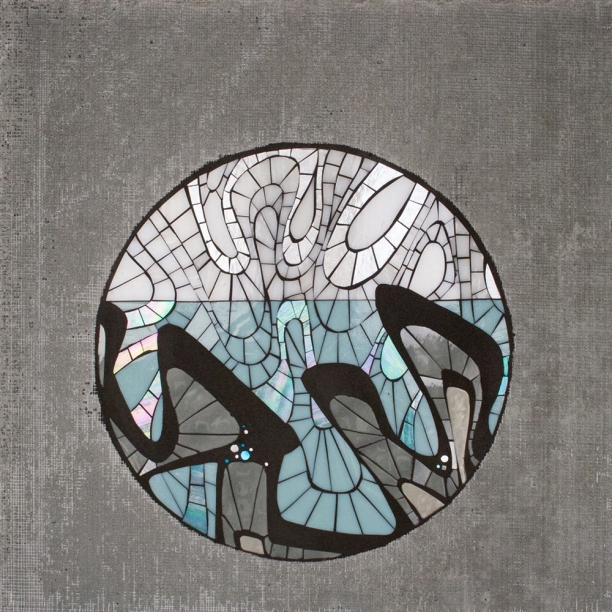
The water of North Pond is surrounded by high-rises and built world elements. In Reflect, water is re-imagined as a reflection of the surrounding built world. Form, variation and motion of the natural world are encoded in line, repetition and symmetry borrowed from the vocabulary of architecture. Living well in the urban environment requires new ways of finding beauty and staying connected to nature. This Lincoln Park Conservancy project offers an important vision for restoring and expanding our connection with the natural world in Chicago.
Art+Green Design
Architect Nate Kipnis of Kipnis Architecture was recently in the studio and we had a fantastic conversation about art+design+architecture. Nate has a thriving architecture practice with a focus on green design: high design/low carbon. He wanted to know in what way my work could be part of a green building project...and I had to do some research before getting back to him with this.
1. Material sustainability. Glass is an (endlessly) recyclable, nontoxic material made from abundant raw materials (silica, soda ash + limestone). One of the major glass manufacturers, Kokomo claims that 99.9% of their glass is green. They are able to recycle 85% of their glass in the form of glass cullets (glass recycled into glass in an endless loop) and the other 15% is recycled by a local company. They also have optimized the efficiency of their furnaces according to EPA standards for factory emissions (via reburning exhaust). Furthermore, located in nearby Indiana, Kokomo is the closest glass manufacturer to Chicago minimizing carbon footprint for transportation.
While cut glass embedded in mortar and grout may not be easily recyclable (although entirely possible), the angle that's of interest to me is that glass is a timeless material with unparalleled physical longevity (no fading, corrosion, deterioration). My goal as an artist is to match this physical longevity with encoded conceptual content to engage viewers across time.
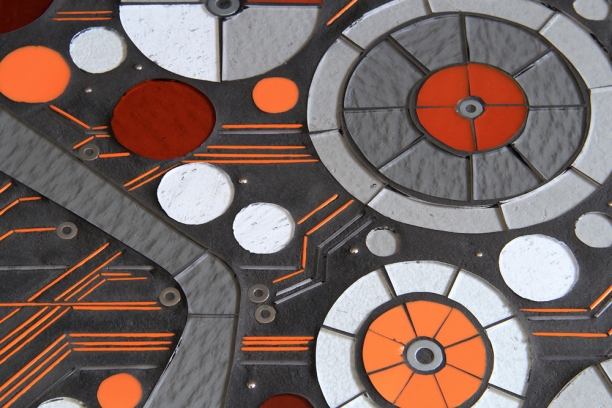
2. Substrate. Cement backer-boards are the tile industry gold standard. Wedi board is my favorite being lightweight, 100% waterproof and superior bond quality compatible with any mortar. Green credentials include CFC-free and inert, recyclable with insulating properties that offer potential energy conservation. The product is lightweight for lower transportation costs.
3. And taking it one step farther...let's call it 'meta-material sustainability.' My own art practice centers around our relationship to the natural world. Living well in the built world depends on finding beauty and staying connected to the natural world--getting that balance of repetition and variation found in nature. EO Wilson's concept of Biophilia hypothesizes that humans have a deep affiliation to the natural world.
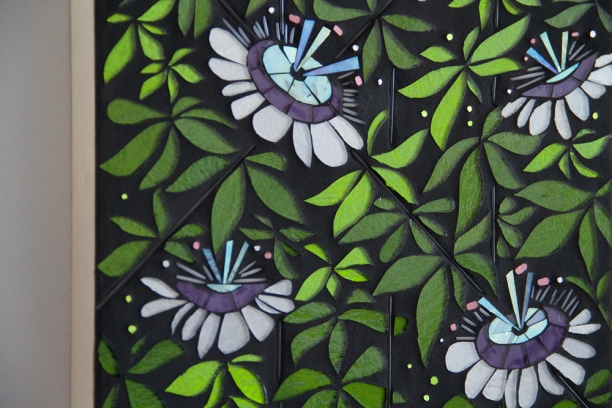
Glass, drawing from the material vocabulary of contemporary architecture, can serve as a proxy for the natural world to create visually engaging environments. It is a zero-maintenance option for catching and reflecting light in interior and exterior space design. It might be a viable alternative to less durable surfaces/materials that will end up in landfill or energy-intensive visual features that are prone to failure (ie living walls, fountain walls).
This all means glass art offers tremendous versatility as a recyclable, non-toxic, zero-maintenance material that can create long-lasting visual vibrancy and interest for people-centric environments. Basically, life changing ; )
FB art share | day 5/5
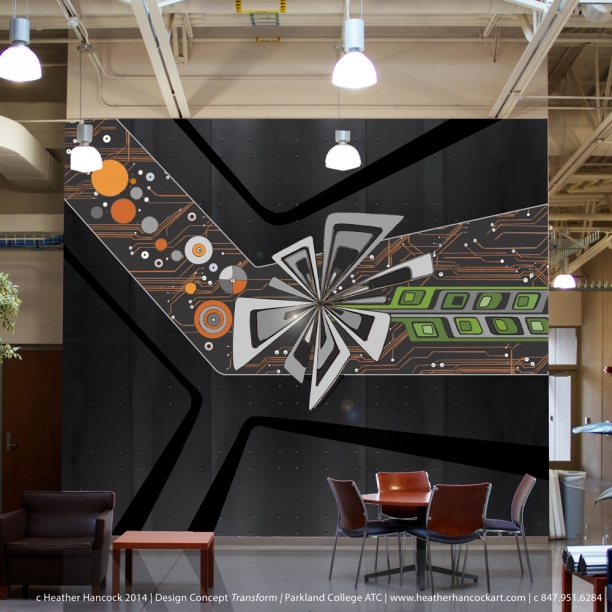
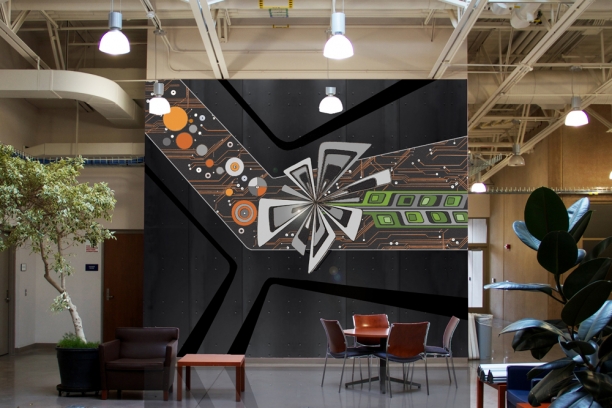
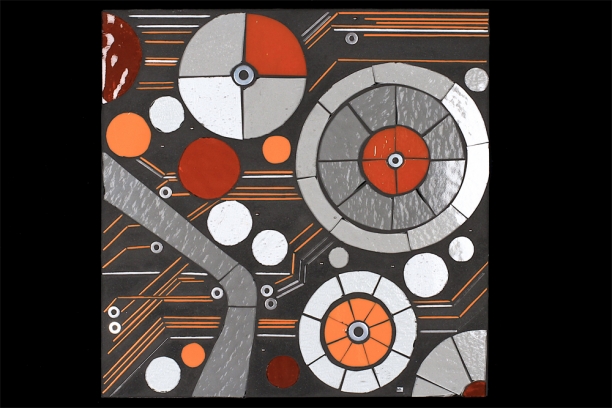
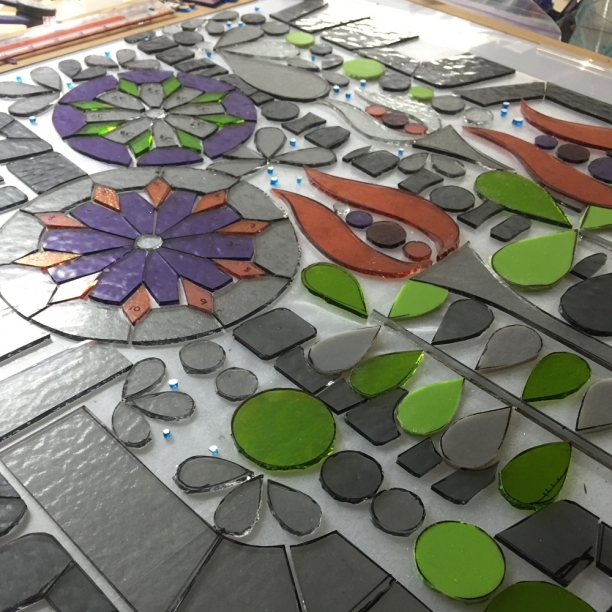
Enjoyed curating 5 selections of recent works for the FB art share so I'm adding here on the blog as well. I'm interested in creating visual experience. I see glass as a powerful medium for drawing viewers into participation with the work as glass shifts and shimmers with changes in lighting and motion. Here are two recent art commissions and renderings of how I can see these working as larger installations. Glass can work in interior and exterior settings making it an extremely versatile medium.
FB art share | day 4/5
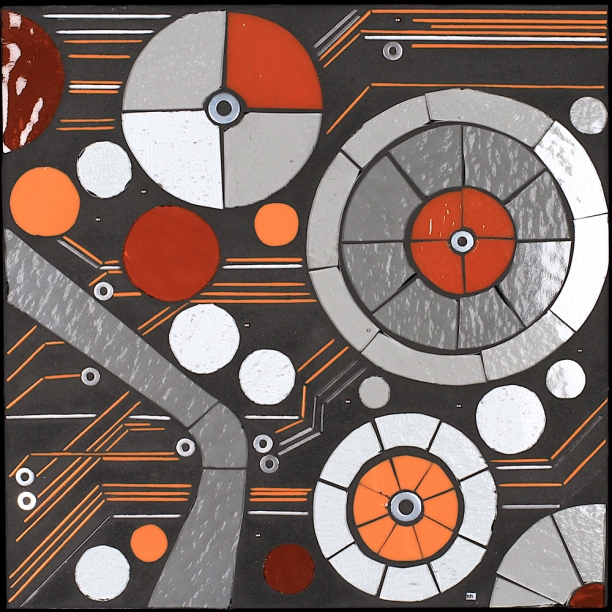
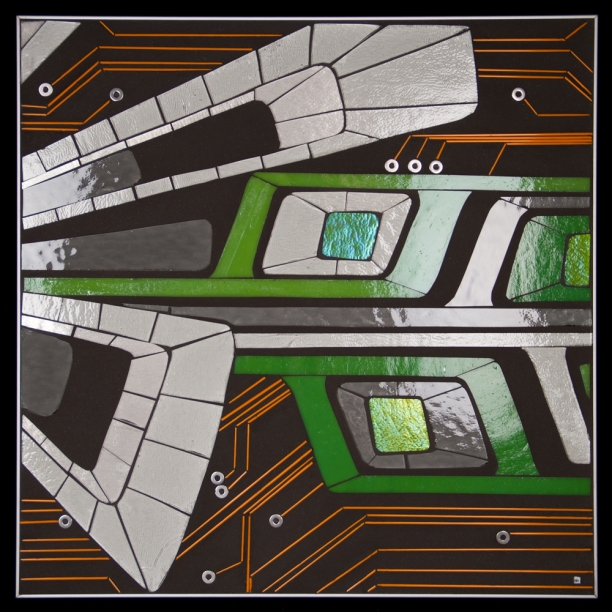
Enjoyed curating 5 selections of recent works for the FB art share so I'm adding here on the blog as well.well. A recent commission, Transform 1.2, was taken from an invited design proposal for State of Illinois Art-in-Architecture project for the Engineering Sciences department at Parkland College in Champaign. Hard-edged line and geometries of an industrial vocabulary are integrated with abstracted forms inspired by the surrounding natural world.
I'm interested in how our vocabulary of beauty is informed by the built world. There are many elements in the built world that offer parallel engagement to those found in the natural world. Possibly because their original design is nature-inspired; maybe because we are innately attuned to find points of order, symmetry, repetition as well as variation, complexity, roughness.
FB art share | day 3/5
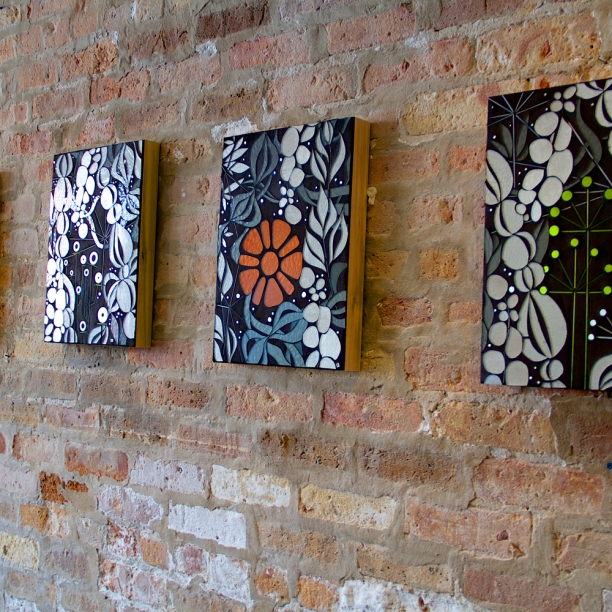
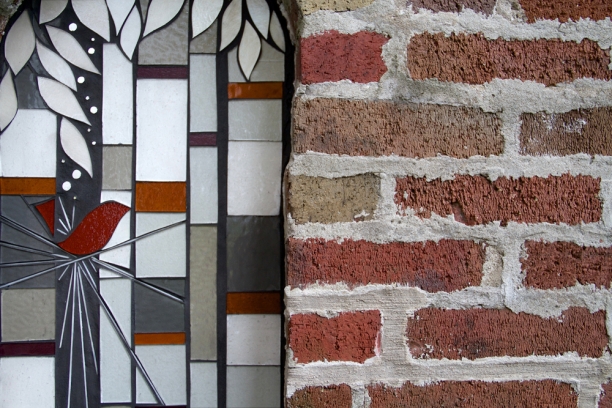
Enjoyed curating 5 selections of recent works for the FB art share so I'm adding here on the blog as well. Given my interest in finding the points of intersection between the built world and natural worlds, I love glass alongside other architectural surfaces and materials...glass with brick, cement board and, of course, grout. I am interested in how nature radicalizes the picturesque with continually changing compositions and surfaces. Shimmering compositions in glass change with lighting and motion.
FB art share | day 2/5
Enjoyed curating 5 selections of recent works for the FB art share so I'm adding here on the blog as well. I grew up on a grain farm in Alberta, Canada. Staying connected to nature in an urban setting is a regular theme in my work. I find inspiration in the vibrancy of both the natural and built worlds for my work in glass. The built world is necessarily based on repetition and precision; the natural world offers a balance of pattern and variation that humans are attuned to.
FB art share | day 1/5
Enjoyed curating 5 selections of recent works for the FB art share so I'm adding here on the blog as well. In a past life I was a speech language pathologist with a focus on neurogenic communication disorders. My work often explores how we engage with and process information...neurons, attention, abstracted text, dreams. Finding pattern within noise is deeply satisfying for the human mind. Spending more than a decade in healthcare environments also attuned me to the importance of our surroundings to well-being and quality of life. Humans thrive in engaging environments. Glass is a uniquely powerful media that shifts and shimmers with light and motion.
Columbia College | Self-Management+Freelancing
Art+function: Transform 1.2
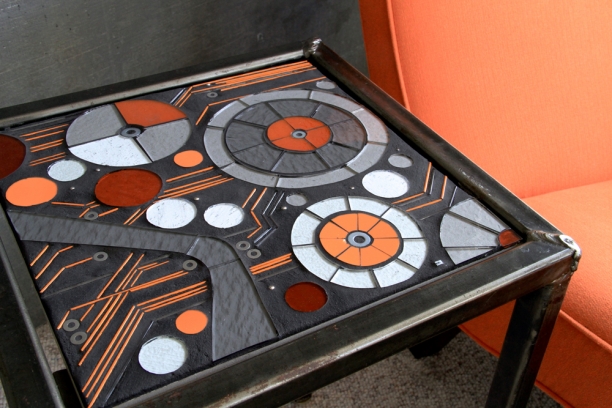
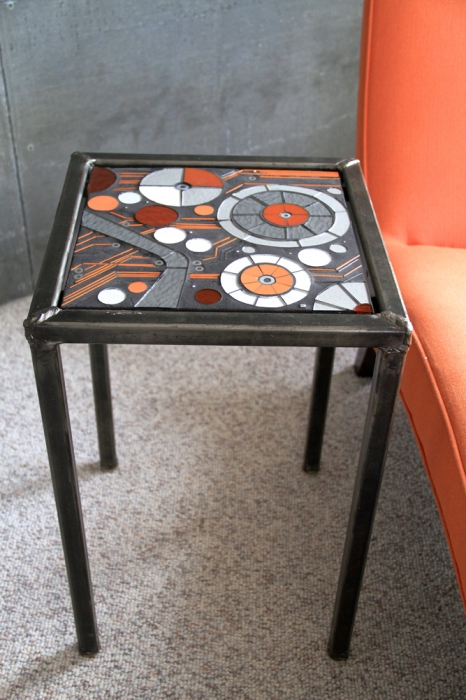
A recent commissioned project turned into a (retrospective) collaboration with my wonderfully talent father and took me full circle back to my starting point with mosaics. A 12" x 12" piece was commissioned from my Transform series as a top for a metal table built by my father. Transform was first developed as an invited design proposal for the Engineering Sciences program at Parkland College in Champaign, IL. It offers a nature-based visual metaphor for the creative process of automotive design/repair and industrial/manufacturing sciences. The imagery connects to the rolling prairie and farmland surrounding the college.
Setting Transform1.2 within a metal table frame makes a material and conceptual connection consistent with the way I envisioned Transform as glass elements integrated within hot rolled steel.
My father is a talented craftsman with a particular fondness for metals. Here's an example of his dimensional, industrial sculptures.
His sleek, industrial style metal tables were the starting point for my work with mosaics. Early mosaic pieces were created as tops for my own metal table until I transitioned to creating art hangings. It was great coming back to these wonderful metal tables. This time with a concept exploring beauty in techno-industrial structure and function for my pilot+aircraft maintenance engineer brother.
More about Transform design proposal.
Proust project: American Psychoanalytic Association national conference
The Proust project was displayed at the national conference of the American Psychoanalytic Association at the Waldorf Astoria hotel in NYC last week. Working with graphic designer Kristin Albert, we translated the project into display posters and 11"x15" folio books with explanatory text by Dr. Barry and the quotations from Proust alongside the nine art pieces and photographs. Seeing the project in book form is a little thrilling...and realizes Dr. Barry's original vision of a book addressing the neuroscience of Marcel Proust’s In Search of Lost Time. Dr. Barry is specifically interested in the so-called “Proust phenomenon” in which intense, visceral memories are evoked by scents.

Author Dr. Barry writes:
Memories elicited by smell are imbued with a kind of visceral and emotional essence that sets them apart from memories called up by words or images alone. I am transported when I bury my nose in a bunch of freshly cut basil; whereas seeing a recipe for Insalata Caprese generates a grocery list. Another parched day of drought makes me wish for rain, but the smell of the earth–the petrichor–after that first rain makes me want to dance and fills me with optimism. The memories evoked by fragrances are rarely bland or colorless; they are drenched in emotion.
Although he didn’t have neuroscience to illuminate why olfaction is so emotionally evocative, Marcel Proust understood the power of scent to unleash ancient, long forgotten memories that form the foundation of our emotional lives. As the title of his great work tells us, In Search of Lost Time (also translated from the French as The Remembrance of Things Past) is concerned with these memories and the stamp they place on the experience of the present.
Scratch and Sniff Proust began as a wisp of a joke and has evolved into something much more–part neuroscience, part art, part psychoanalysis.
Grow 1.6
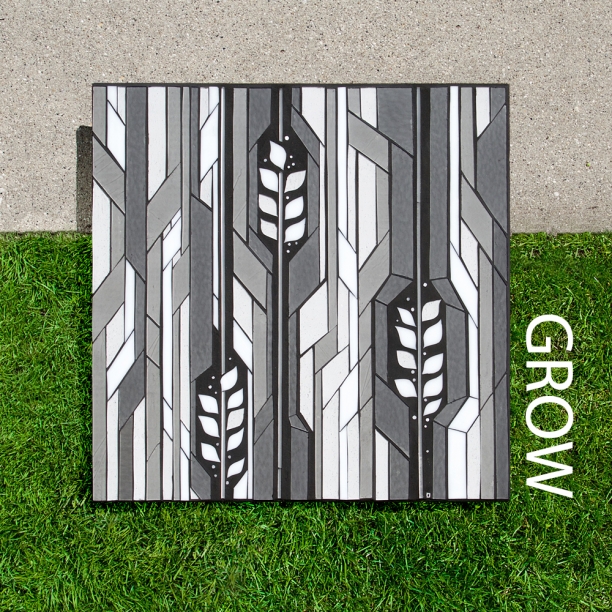
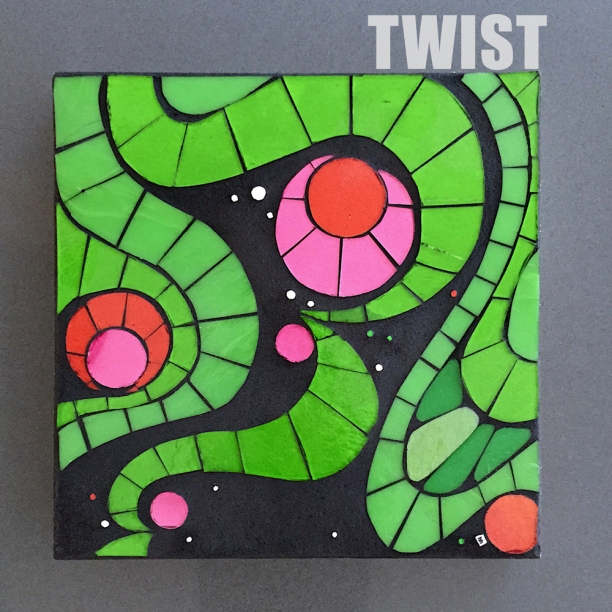
Good to be working with color during this frigid week in Chicago. Back to exploring grays and greens in the digital prairie series, Grow. Grow addresses the points of intersection between the manmade and natural worlds. Prairie-inspired grain elements grow on stems and plants inspired by circuit board lines. Living in urban settings requires new ways of finding beauty and staying connected to nature.
Proust project: Flourish
The Proust series is headed to NYC next week. The work will be displayed in book form as part of the art show for the American Psychoanalytic Association at the Waldorf Astoria Hotel. Images of all nine art pieces along with Dr. Barry’s explanatory text, the Proust quotation and the literal photographs will be printed in a large format book as a visual introduction to the project. Dr. Barry's book addresses the neuroscience of Marcel Proust’s In Search of Lost Time, specifically exploring the so-called “Proust phenomenon” in which intense, visceral memories are evoked by scents.
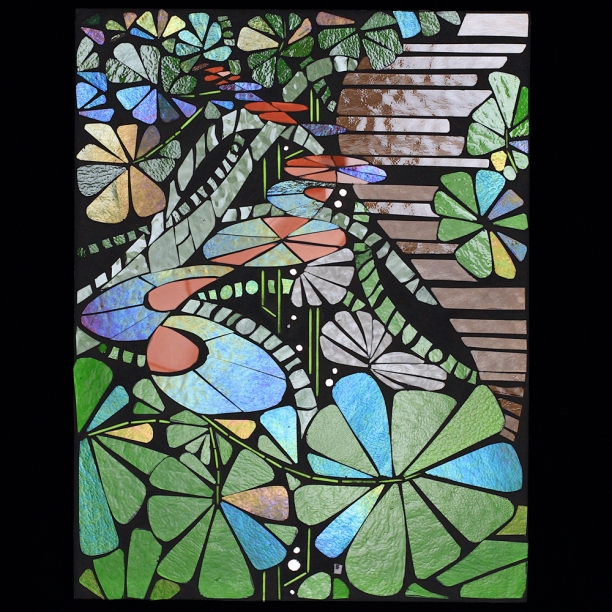
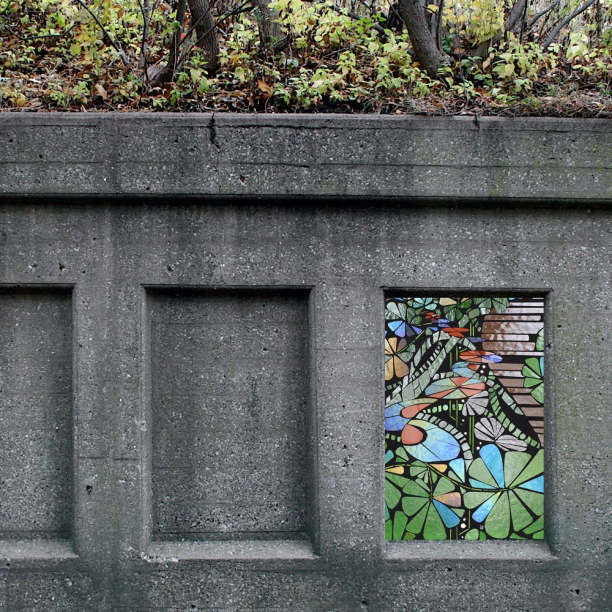
Flourish completes the series with a curving, organic composition in lush rich color. Going back to Proust’s In Search of Lost Time, this piece offers a complete re-ordering of space and time. Proust makes the argument that it is when past and present merge that time can be altered and even temporarily halted. Dr. Barry discusses the importance of this concept in the practice of psychoanalysis where “the halting of time occurs as the multiple layers of existence are allowed to exist simultaneously, and one can be as a child in the presence of one’s adult self, and use one’s adult self to heal the child."
All compositional elements are reworked as curving and vining elements, suggesting the fluidity of time, interconnectedness of experience and potential for flourishing. Our central ‘constructive memory’ circles become a path that points to illumination and the concept of the journey. Curved and fragmented text elements connect to the importance of language as a tool in psychoanalysis. New ambiguous compositional elements can be read as a encoded information or connect with literal imagery in previous pieces.
Photographs serve as visual metaphors for the invisible processes of introspection, discovery and association. Images of the hippocampus--critical to the consolidation of memories--were provided courtesy of neuroscientist Justine Kupferman and tie back to the fundamental aim of the book project: to understand the neuroscience behind Marcel Proust.
The fragmented, disorienting Dream piece is drawn from this larger composition which offers a more complete image of journey and flourishing associated with the process of psychoanalysis.
See all pieces in the Proust series.
Proust project: Dreams
The Dreams piece is grouted and offers a fragmented, curving vision to suggest the fluidity of time and space and the consolidation and organization of experiences that happens in dreaming.
The composition for Dreams is cropped from the larger drawing for the final piece Flourish, connected to the last chapter about psychoanalysis. Our central ‘constructive memory’ circles have transformed into a path, connecting with the concepts of illumination and journey. Curved and fragmented text elements point to the function of dreams in consolidating and organizing experience. New ambiguous compositional elements may read as a code or information or connect with literal imagery in previous pieces.
Up until this piece, the photographs for each page layout have addressed the literal images featured in the Proust quotation. For Dreams, we needed photographs to provide visual metaphors for the non-picturable experience of dreaming. We selected this image featuring architectural disorientation and vibrant fluorescent lighting in the staircase at the Harris Theater in Chicago.
Images of neurons were provided courtesy of neuroscientist Justine Kupferman and tie back to the fundamental aim of the book project: to understand the neuroscience behind Marcel Proust.
See full Proust project series here
Shimmer + Glow: holiday gift ideas
Proust project: dreams
On schedule to complete the final two pieces in the Proust project this week. I settled on a palette of cool and warm grays, gray-greens and gray-blues to evoke a floating, dreamy experience.
The composition for Dream is cropped from the larger drawing for Flourish, the piece connected to the last chapter about psychoanalysis. All elements in these pieces are curving and vining, suggesting fluidity of time, interconnectedness of experience and ultimately flourishing. Our central ‘constructive memory’ circles have transformed into a path, connecting with the concepts of illumination and the journey. Curved and fragmented text elements point to the function of dreams in consolidating and organizing experience and to the importance of language as a tool in psychoanalysis. New ambiguous compositional elements may read as a code or information or connect with literal imagery in previous pieces.
The basic compositional structure is now re-worked into a fragmented, abstract vision of dreaming and a flourishing, blooming concept for psychoanalysis.
passiflora...as biz cards
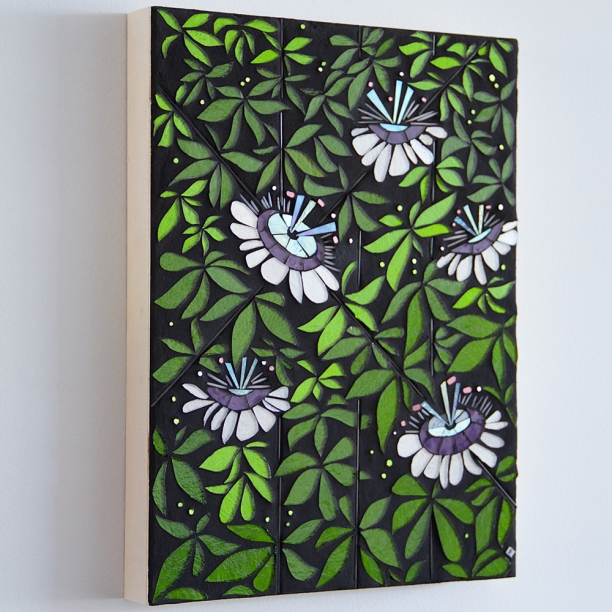
My client just dropped by a handful of her new business cards featuring images of Passiflora. She commissioned Passiflora a couple months ago as part of a branding project. You can read the full story here. Talented graphic designer Kristin Albert transformed the images into these gorgeous cards.
Proust project: final pieces
I'm on a deadline to finish the final two pieces in the Proust series. Author Virginia Barry is presenting at the national conference for the American Psychoanalytic Association in New York in January and submitted the art pieces for the accompanying art exhibition. The work has been accepted and the plan is to prepare posters of all nine pieces in the series featuring Dr. Barry's explanatory text for each chapter along with the Proust quotation, literal photographs and image of each art piece.

These final pieces address the big daunting topics of Dreams and Psychoanalysis. Going back to Proust's In Search of Lost Time, the pieces need to convey a complete re-ordering of space and time. Proust makes the argument that it is when past and present merge that time can be altered and even temporarily halted. Dr. Barry discusses the importance of this concept in the practice of psychoanalysis where "the halting of time occurs as the multiple layers of existence are allowed to exist simultaneously, and one can be as a child in the presence of one's adult self, and use one's adult self to heal the child" (p. 6).
The goal for these two pieces is to connect a fragmented, disorienting Dream piece with the bigger picture in a flourishing, thriving Psychoanalysis piece. All elements in these pieces are now reworked as curving and vining elements, suggesting fluidity of time, interconnectedness of experience and flourishing and thriving. Our central 'constructive memory' circles become a path that points to illumination and the concept of the journey. Curved and fragmented text elements connect with the function of experience being consolidated and organized in dreaming and point to the importance of language as a tool in analysis. New ambiguous compositional elements can be read as a code or information or connect with literal imagery in pervious pieces.
This is an admittedly ambitious plan for 12" x 16" pieces but offers a complete re-working of the basic compositional structure into a fragmented, abstract vision of dreaming and a flourishing, blooming concept for psychoanalysis.
See all pieces in the Proust series.